Three Apples for One: Why Eating Healthy May Not Be Enough Anymore
- Luba Serebrenik
- 0 comments
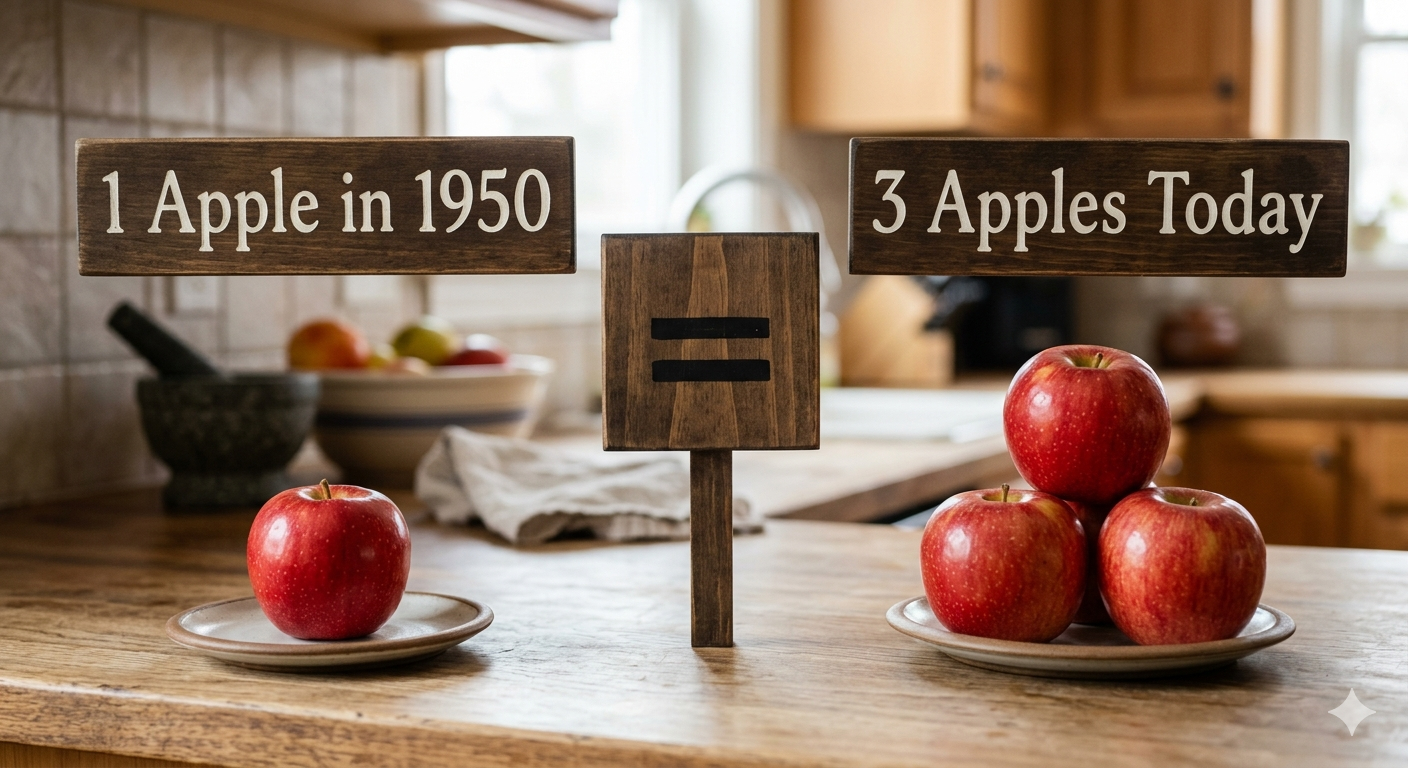
To get the same iron your grandmother got from one apple in 1950, you would need to eat three apples today.
Three apples for one? Let that sit with you for a moment.
So many of us are doing the right thing. We are choosing fresh fruits and vegetables. We are making salads, cooking at home, avoiding processed food, and trying our best to take care of our body.
But what if the food itself is not giving us the same nourishment it once did?
This is not about fear. It is about awareness.
And it is the beginning of a deeper conversation about our soil, our minerals, and why even “eating healthy” may not always be enough to fully support the body today.
The Hidden Issue: Mineral Depletion
Our body needs minerals to function.
Minerals support energy, immune function, hormone balance, the nervous system, healthy muscles and bones, mood, and hundreds of enzyme reactions inside us.
I like to think of minerals as little sparks of life. They help the body communicate. They help the cells do their work. They help us feel grounded, energized, clear, and resilient.
But here is the part many people do not realize. Plants cannot create minerals. They receive them from the soil.
So when the soil is depleted, the plants grown in that soil are less rich in minerals. The produce can still look beautiful — big, colorful, shiny, perfect on the grocery store shelf — but it does not always carry the nourishment it once did.
The Numbers Are Real
A recent review found that since 1950, our fruits and vegetables have lost between 25% and 50% of their nutrient density.
Iron in produce has dropped by almost 50%. Copper has dropped by 49%. Leafy greens have lost more than 30% of their iron. Zinc in vegetables has dropped by 30%. Soil zinc on some farms has dropped by 43%. Soil copper has dropped by 53%.
Researchers call these “reliable declines.” A polite way to say the evidence is undeniable.
So yes, our fruits and vegetables are still important. But they may not always be enough on their own.
What Happened to Our Food
There are three big reasons our food has changed.
1. We take from the soil and never give back. Every plant takes minerals from the earth. In nature, plants die in the same place and return their minerals to the ground. But on big farms, the food is shipped far away. The minerals never come home. Chemical fertilizers add nitrogen and potassium, but not the trace minerals like iron, copper, and zinc that our body needs most.
2. The same crops grow in the same fields for many decades. This pattern slowly drains the life from the soil. The small bacteria and fungi that help plants absorb minerals are disappearing. The food still looks beautiful and big. But it cannot give our body what it needs.
3. More CO2 in the air is changing how plants grow. With more carbon in the atmosphere, plants make more sugar and starch — but fewer minerals. Researchers call this “carbon dilution.” Protein in food drops by almost 10%. Iron by 16%. Zinc by more than 9%.
Healthy soil is not just dirt. It is alive.
It contains minerals, microorganisms, fungi, organic matter, and an entire ecosystem that helps plants grow and absorb nutrients. When the soil is healthy, plants are nourished. When plants are nourished, we are nourished.
And when the soil loses its vitality, our food loses some of its vitality too. This is why I love talking about food from a holistic perspective.
Food is not just calories. It is not just protein, carbs, and fat. Food is a relationship between the soil, the plant, the sun, the water, the farmer, the earth, and our body. Everything is connected.
It Is Not Only the Food
The food in the store is one part of the story. But many things in our daily life also take minerals from us. Here are the main ones I see with my clients:
Too much caffeine.
Coffee and tea are acidic. To keep our blood pH balanced, the body must neutralize this acidity. It uses minerals like potassium, magnesium, and calcium for this work. So when we drink coffee all day without eating enough mineral-rich food, the body uses its own mineral reserves to stay in balance.
Caffeine also makes us lose more calcium and magnesium in the urine. And the tannins in coffee and tea block the absorption of iron. One or two cups a day is okay for most people. But five or six cups every day — your bones and your nervous system feel it.
Sugar spikes.
When our blood sugar goes up and down all day, the body uses a lot of magnesium to bring it back to balance. High sugar also damages collagen. This is called “glycation.” Our skin, joints, and blood vessels all need collagen. When sugar is high all the time, collagen breaks down faster — and we see it in our face, our joints, and our energy.
Chronic stress.
This is the biggest one I see in women over 40. When we are in stress, the body uses a lot of magnesium. Magnesium is needed for more than 300 things in our body — sleep, mood, muscles, heart. Stress also depletes zinc and B vitamins. A stressful life is also a depleted life.
Alcohol.
Even a glass of wine every evening affects our minerals. Alcohol takes away magnesium, zinc, and B vitamins. It also makes it harder for our body to absorb calcium.
Processed foods and too much salt.
Packaged food has a lot of sodium. When sodium is too high, our body loses more calcium in the urine. This is one reason many women have problems with their bones after 50.
Some medications.
Antacids and medications that block stomach acid make it harder for us to absorb calcium, magnesium, and B12. If you take these every day, please talk with your doctor about supporting your minerals.
Poor sleep.
When we do not sleep well, our body cannot use the minerals it has. The nervous system needs deep rest to repair and balance our minerals.
So you see — the picture is bigger than the food on our plate.
You Are Not Doing Anything Wrong
This is the part I really want you to hear.
If you are eating healthy and still feeling tired, depleted, foggy, inflamed, or not quite yourself, it does not mean you are failing.
It does not mean your body is broken. It does not mean you have no willpower. It may simply mean your body needs deeper support.
We live in a world where our nervous systems are overstimulated, our stress is high, our sleep is often interrupted, our food is different, and our body is constantly trying to adapt.
So instead of blaming ourselves, we can start asking better questions.
Am I getting enough minerals?
Am I eating enough variety?
Is my digestion strong enough to absorb the nutrients I eat?
Is my nervous system calm enough to properly digest and assimilate food?
Am I choosing foods grown in healthy soil when possible?
Does my body need additional support through minerals, herbs, whole-food nutrients, or high-quality supplementation?
These are loving questions. They are not questions of judgment. They are questions of listening.
A Holistic View of Nourishment
To me, nourishment is not only about what is on your plate.
It is also about how you live. It is the food you eat. The soil it was grown in. The way you digest and absorb it. The stress you carry. The thoughts you think. The emotions you hold. The breath you take. The love you allow yourself to receive.
Your body is always communicating with you. When you feel depleted, the answer is not to shame yourself or push harder. The answer is to listen more deeply.
What I Do, and What You Can Do Too
First, please do not stop eating fruits and vegetables. Eat the rainbow. Choose seasonal produce when you can.
Visit farmers markets if they are available to you. Support local farms. Grow herbs on your windowsill. Grow vegetables in your garden or even in pots.
Choose organic when possible, especially for the foods you eat often. Wash your produce well. Eat a variety of colors and textures. Add herbs. Add sprouts. Add fermented foods. Add bitter greens to support digestion.
And most importantly — eat with gratitude. When we pause before eating and truly appreciate our food, we shift our body into a more receptive state. Digestion begins before the first bite.
Here is what I also do in my own life, and what I teach the women I work with:
🌿 I lean on plants and herbs as my support. Mineral-rich herbs like nettle, oat straw, alfalfa, and red raspberry leaf give us the trace minerals our food cannot give in the same amount anymore. I drink them as nourishing infusions.
🌿 I am gentle with caffeine, sugar, and alcohol. I do not drink coffee. I prefer matcha and herbal teas — they give me steady energy without depleting my minerals. With sugar and alcohol, I keep it simple. Small amounts, not every day. Small changes make a big difference.
🌿 I take care of my stress. Meditation, breath, gentle walks in nature, time alone without my phone.
🌿 I protect my sleep. Deep, quiet sleep is when our body repairs and balances our minerals.
🌿 I use essential oils every day. They support my energy, my immune system, my emotions, and my nervous system.
🌿 I am learning to listen to my body more. Tiredness, brain fog, low mood, anxiety — these are messages from the body. Not failures.
🌿 I take high-quality supplements to support my body. In today’s world, even the best diet may not give us everything we need. This is why I include clean, high-quality supplementation as part of my daily routine.
The supplements I personally use and love are doTERRA MetaPWR Advantage and VMG+ Whole-Food Nutrient Complex. I chose them because I trust the purity, the testing, and the integrity of what goes into each product.
MetaPWR Advantage supports healthy metabolic function, energy, vitality, and overall cellular wellness. I love that it looks at metabolism not only as weight or calories, but as the body’s deeper energy system — how we create energy, how we age, and how we support our cells.
VMG+ Whole-Food Nutrient Complex is a beautiful foundational option. It is a daily nutritional drink with whole-food vitamins and minerals, fruits, vegetables, digestive enzymes, probiotics, essential oils, and other nutrients designed to support overall wellness.
What I love about this kind of support is that it is not about replacing a healthy lifestyle. It is about supporting the body so it can function better.
Supplements are not a shortcut around nourishment. They are one piece of a bigger holistic picture — along with real food, hydration, movement, rest, emotional balance, nervous system care, sunlight, herbs, breath, and listening to your body.
For some people, the right foundational support can make a beautiful difference in how they feel day to day.
More steady energy. Better nourishment. More support for digestion. More support for the immune system. More support for the whole body.
And sometimes that is exactly what the body has been asking for.
A Gentle Invitation 🙏
This week, I invite you to look at your food with gratitude and curiosity.
When you eat your fruits and vegetables, pause for a moment. Think about the soil. The rain. The sun. The farmers. The hands that brought this food to you. The intelligence of your body receiving it.
And then gently ask yourself:
What else does my body need to feel deeply nourished?
The answer may be simpler than you think.
Come Talk With Me
You do not have to figure this out alone.
If you are feeling tired, depleted, foggy, or simply wondering what your body needs right now — I would love to talk with you.
I am offering a free 40-minute holistic health consultation to women who want to explore this conversation more deeply.
We can talk about your energy, your minerals, your daily habits, your stress, your sleep, and what your body may be asking for.
No pressure. Just a real conversation between two women.
👉 Book your free 40-minute consultation here 👈
Pick a time that works for you. I will see you there.
With love always,
Luba
- Free email delivery
Lentil Mushrooms Tacos with Spicy Lime Vinaigrette
- Download
- 1 file